
The Institution Protects Itself
All the Old KnivesThe intelligence service’s secrecy and aversion to public accountability shape the response to the hijacking and the later search for a culprit.
increasing Bearing strength in each event
 decreasing
Bearing strength in each eventdecreasingA Political Compromise

A Political Compromise
Cooperation
Henry is ordered to assist Russian security forces after the theater crisis, despite his objections to the policy. The institution prioritizes political cooperation over the safety of a source.
Precedent
Henry’s disclosure establishes a pattern in which the agency can ask an individual to absorb the consequences of a larger strategic decision. His later conduct grows out of this compromised model.
Secrecy on the Tarmac
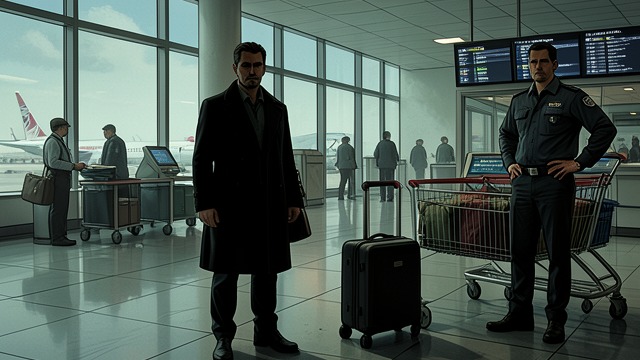
Secrecy on the Tarmac
Compartmentalization
The station keeps Ahmed’s identity from the Austrian authorities. Protecting an asset becomes a reason to limit cooperation with the people responsible for responding on the ground.
Cost
The secrecy may protect sources, but it also slows shared decision-making. The station’s defensive habits become part of the crisis rather than a solution to it.
A Closed Review
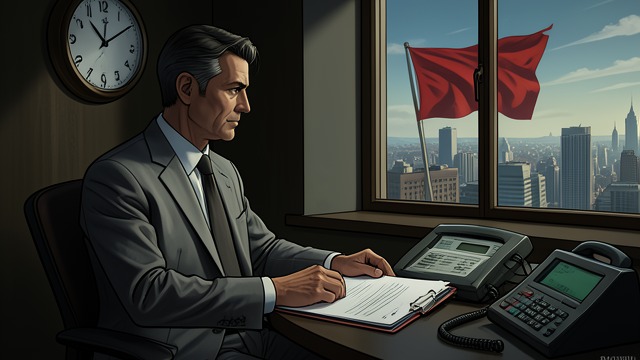
A Closed Review
Suppression
The station considers the possibility of an insider leak but does not produce a full public accounting. The fear of scandal and institutional damage discourages a direct explanation.
Persistence
The unaddressed questions survive for years. Secrecy does not close the case; it allows suspicion to become more entrenched.
A Convenient Investigation

A Convenient Investigation
Official Story
Henry describes the inquiry as a request for a report to satisfy an outside authority. His account gives him a legitimate reason to revisit the past without naming the private and institutional pressures involved.
Evasion
The stated process is less important than the outcome Henry expects: identify a culprit without inviting a public prosecution. Procedure becomes a cover for a predetermined form of resolution.
A Private Execution Logic
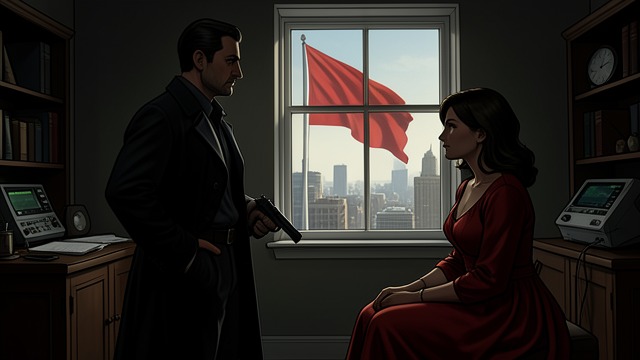
A Private Execution Logic
No Trial
The characters speak as though a suspected traitor cannot be taken to court and must instead be handled outside normal law. This expectation makes violence appear administratively practical.
Reproduction
Henry hires Treble; Celia’s team poisons Henry; Treble may be sent after Celia. The institution’s logic spreads into private action, with each side claiming survival as its warrant.
After the Moscow theater crisis
December 2006, during the Flight 127 crisis
After the mass killing
October 2012, before Henry reaches Carmel
The closing hours of the novel
